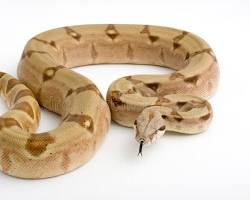
Quick Facts
Adult Size
6-10 feet (females larger; some localities larger)
Origin
Central and South America
🌱
Beginner Suitability
First Reptile?no
Beginner Score6/10
⚠ Beginner Warnings
Large adult size requiring 6-8+ ft enclosures and two-person handling, 20-30+ year commitment, strong snake requiring respect and proper handling technique
🤚
Temperament & Handling
Temperamentdocile
Handling Toleranceexcellent
Handling NotesGenerally very docile and calm with regular handling. Adults are strong and heavy - two-person handling recommended for specimens over 6 feet. More aware and interactive than many snakes.
🌡️
Temperature & Humidity
Temperature
Basking90°F
Ambient80°F
Night75°F
Basking spot 90-95°F, ambient 80-85°F, cool side 78-80°F. Night temps can drop to 75°F. Large enclosures need multiple heat sources.
Humidity
Target Range60% – 75%
Moderate to high humidity 60-75%. Higher humidity than many North American colubrids. Important for respiratory health and proper shedding.
💡
Lighting & UVB
UVB RequiredYes — Required
Target UVI0.7-1.0
Lighting NotesFerguson Zone 2. UVB is beneficial for immune function and natural behavior. Low-output 5-6% T5 UVB recommended.
🏠
Enclosure
Minimum Size6x2x2 ft minimum for adults
Recommended Size8x4x4 ft for large adults
Enclosure Typesemi arboreal
🪨
Substrate & Environment
Substrate TypeCypress mulch, coconut fiber, or bioactive mix. Substrate should hold some humidity.
Substrate Depth3-6 inches
Water Featureno
Water NotesLarge water bowl for soaking. Change frequently as boas often defecate in water. Some boas enjoy soaking before shedding.
🦎
Activity & Behavior
Activity Patterncrepuscular
Social Behaviorsolitary
CohabitationNever cohabitate. Large constrictors should always be housed individually. Potential for serious injury if snakes interact.
🍽️
Diet & Nutrition
Diet Typecarnivore
Feeding FrequencyEvery 10-14 days for adults; every 7-10 days for juveniles
Diet NotesAppropriately sized rodents progressing to rabbits for large adults. Feed prey items 10-15% of snake body weight. Avoid overfeeding - obesity is common in captive boas.
💊 Supplementation Schedule
Not required when feeding whole prey. Boas get complete nutrition from appropriately sized rodents and rabbits.
✅ Recommended Foods
| Food | Category | Ca:P | Usage |
|---|
| Pinky Mouse | whole_prey | 1.5 | staple |
| Fuzzy Mouse | whole_prey | 1.5 | staple |
| Hopper Mouse | whole_prey | 1.5 | staple |
| Weaned Rat | whole_prey | 1.5 | staple |
🚫 Foods to Avoid
| Food | Toxicity | Category |
|---|
| Avocado | ☠️ fatal | fruit |
| Fireflies | ☠️ fatal | insect |
| Foxglove | ☠️ fatal | flower |
| Garlic | ☠️ fatal | vegetable |
⚕️
Health & Critical Care
Respiratory infections, inclusion body disease (IBD), parasites, scale rot, regurgitation, obesity
Health NotesIBD is a serious concern in boid collections - quarantine all new animals for 90+ days. Obesity from overfeeding is very common. Monitor body condition carefully.
🥚
Breeding
Difficultymoderate
SeasonWinter/spring after cooling
Clutch Size10-64 live young (viviparous - no eggs)
Incubation100-120 days gestation
Sexual Dimorphismmoderate
Breeding NotesLive-bearing species - no egg incubation needed. Cooling period (60-75°F nights for 2-3 months) triggers breeding. Large litters are possible.
✨
Available Morphs
Normal, Albino (several lines), Anery, Hypomelanistic, Sunglow, Jungle, Motley, IMG, Leopard, Arabesque, BEL (Blue-Eyed Leucistic)
💰
Cost & Availability
Price Rangemoderate
Availabilitycommon
🌍
Native Habitat
Native RegionCentral and South America
Habitat Typerainforest
Climate NotesVaried habitats from rainforest to semi-arid regions depending on locality. Some localities are arboreal as juveniles becoming more terrestrial as adults.
📋
Legal & Conservation
Conservation StatusLeast Concern
CITES Listingappendix ii
Legal RestrictionsCITES Appendix II regulates international trade. Some localities require permits.
Looks good? Hit Cmd+P (Mac) or Ctrl+P (Windows) to save as PDF.