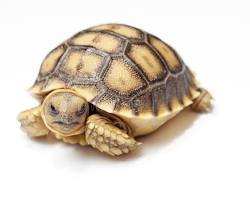
Quick Facts
Adult Size
24-36 inches shell length; 80-150+ pounds
Lifespan
70-100+ years (multi-generational commitment)
Origin
Sub-Saharan Africa (Sahel region)
🌱
Beginner Suitability
First Reptile?no
Beginner Score2/10
⚠ Beginner Warnings
MASSIVE adult size (80-150+ pounds) requiring permanent outdoor enclosure, 70-100+ year lifespan is multi-generational commitment, significant ongoing costs, rescue system overwhelmed, NOT for apartments or those without yard space
🤚
Temperament & Handling
Temperamentdocile
Handling Toleranceexcellent
Handling NotesGenerally calm and handleable but adults are extremely heavy (80-150+ lbs) and strong. They will bulldoze anything in their path. Can become very interactive and food-motivated.
🌡️
Temperature & Humidity
Temperature
Basking100°F
Ambient85°F
Night70°F
Basking 95-100°F. Ambient 85-90°F during day. Night temps should not drop below 60°F for extended periods - heated shelter essential in cooler climates.
Humidity
Target Range40% – 60%
Moderate humidity 40-60%. Not as dry as some desert species. Higher humidity helps prevent pyramiding during growth.
💡
Lighting & UVB
UVB RequiredYes — Required
Target UVI3.0-4.0
Lighting NotesFerguson Zone 3-4. Natural sunlight in outdoor enclosures is ideal and cannot be replicated indoors. Indoor housing for juveniles requires strong T5 HO 12% UVB.
🏠
Enclosure
Minimum Size8x8 ft heated shelter
Recommended SizeOutdoor enclosure with secure fencing; minimum 100+ sq ft for adult; ideally much larger
Enclosure Typeterrestrial
🪨
Substrate & Environment
Substrate TypeNatural grass for outdoor. Cannot be practically housed indoors as adults. Indoor housing only appropriate for juveniles temporarily.
Substrate DepthN/A - outdoor on natural ground
Water Featureno
Water NotesLarge shallow water tray for soaking and drinking. Sulcatas enjoy soaking. Clean water changed frequently.
🦎
Activity & Behavior
Activity Patterndiurnal
Social Behaviorsolitary
CohabitationMales are highly aggressive toward each other - never house together. Females can coexist in very large enclosures. Male-female pairs result in constant breeding harassment of females.
🍽️
Diet & Nutrition
Diet Typeherbivore
Feeding FrequencyDaily grazing access
Diet NotesGrass and hay based diet - 75%+ should be grass, hay, and native browse. Orchard grass, timothy hay, bermuda grass. Supplement with dark leafy greens. VERY LIMITED fruit. NO animal protein.
💊 Supplementation Schedule
Calcium without D3 if outdoors with natural sun. Calcium with D3 for indoor juveniles. Cuttlebone available for self-supplementation.
✅ Recommended Foods
| Food | Category | Ca:P | Usage |
|---|
| Collard Greens | leafy | 9.3 | staple |
| Mulberry Leaf | leafy | 5 | staple |
| Turnip Greens | leafy | 4.5 | staple |
| Hibiscus Leaf | leafy | 4.2 | staple |
🚫 Foods to Avoid
| Food | Toxicity | Category |
|---|
| Avocado | ☠️ fatal | fruit |
| Fireflies | ☠️ fatal | insect |
| Foxglove | ☠️ fatal | flower |
| Garlic | ☠️ fatal | vegetable |
⚕️
Health & Critical Care
Metabolic bone disease, pyramiding, respiratory infections, bladder stones, parasites, shell rot, overgrown beak
Health NotesPyramiding from improper humidity and diet during growth. Bladder stones from dehydration. Regular beak maintenance may be needed. Adults are prone to injuring themselves by ramming fences.
🥚
Breeding
Difficultydifficult
SeasonAfter cooling period
Clutch Size15-30 eggs (can be more)
Incubation90-180 days at 82-86°F
Sexual Dimorphismmoderate
Breeding NotesCooling period helps trigger breeding. Large clutch sizes require proper incubation equipment. Long incubation period.
💰
Cost & Availability
Price Rangebudget
Availabilitycommon
🌍
Native Habitat
Native RegionSub-Saharan Africa (Sahel region)
Habitat Typesemi arid
Climate NotesSemi-arid grassland south of Sahara desert. Hot days and cooler nights. Seasonal wet and dry periods.
📋
Legal & Conservation
Conservation StatusEndangered
CITES Listingappendix ii
Legal RestrictionsCITES Appendix II. Trade regulated internationally.
Looks good? Hit Cmd+P (Mac) or Ctrl+P (Windows) to save as PDF.