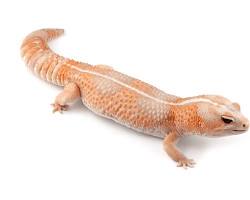
Quick Facts
Origin
West Africa (Senegal to Cameroon)
🌱
Beginner Suitability
First Reptile?yes
Beginner Score8/10
⚠ Beginner Warnings
Higher humidity requirements than leopard geckos (the main difference), humid hide must be available at all times, may be initially shier
🤚
Temperament & Handling
Temperamentdocile
Handling Toleranceexcellent
Handling NotesGenerally calmer and more docile than leopard geckos, but may be shier initially. Handle from below supporting full body. Start with short sessions until gecko is comfortable.
🌡️
Temperature & Humidity
Temperature
Basking88°F
Ambient78°F
Night68°F
Similar to leopard geckos. Basking spot 88-92°F on warm side. Cool side 75-78°F. Night drop to 68-72°F is fine. Overhead heating preferred.
Humidity
Target Range50% – 70%
Higher humidity than leopard geckos at 50-70% ambient. Humid hide must be maintained at 80-90% humidity at all times. This is the main care difference from leopard geckos.
💡
Lighting & UVB
UVB RequiredYes — Required
Target UVI0.7
Lighting NotesFerguson Zone 1. Low-output UVB like Arcadia ShadeDweller 7% or Zoo Med 5.0 is beneficial but optional. Same UVB approach as leopard geckos.
🏠
Enclosure
Minimum Size36x18x18 in (40 gallon)
Recommended Size48x24x18 in
Enclosure Typeterrestrial
🪨
Substrate & Environment
Substrate TypeCoconut fiber or cypress mulch to hold humidity. Avoid dry substrates like aspen. Bioactive setups work well.
Substrate Depth3-6 inches for burrowing and humidity retention
Water Featureno
Water NotesWater dish changed daily. Humid hide with moist sphagnum moss is ESSENTIAL - should be available at all times, not just during shedding.
🦎
Activity & Behavior
Activity Patterncrepuscular
Social Behaviorsolitary
CohabitationNo cohabitation recommended. While less prone to aggression than leopard geckos, stress from cohabitation causes health issues and potential injuries. House individually.
🍽️
Diet & Nutrition
Diet Typeinsectivore
Feeding FrequencyEvery day for juveniles; every 2-3 days for adults
Diet NotesVariety of gut-loaded insects: crickets, dubia roaches, mealworms, superworms, black soldier fly larvae. Feed 2-3 appropriately sized insects per inch of gecko length.
💊 Supplementation Schedule
Calcium without D3 dusted on insects at most feedings when UVB is provided. If no UVB: calcium with D3 at 1-2 feedings per week. Multivitamin 1-2x monthly.
✅ Recommended Foods
| Food | Category | Ca:P | Usage |
|---|
| Black Soldier Fly Larvae | insect | 7 | staple |
| Dubia Roach | insect | 0.4 | staple |
🚫 Foods to Avoid
| Food | Toxicity | Category |
|---|
| Avocado | ☠️ fatal | fruit |
| Fireflies | ☠️ fatal | insect |
| Foxglove | ☠️ fatal | flower |
| Garlic | ☠️ fatal | vegetable |
⚕️
Health & Critical Care
Metabolic bone disease, parasites, stuck shed (often from insufficient humidity), respiratory infections, tail loss, cryptosporidiosis
Health NotesStuck shed is more common than in leopard geckos if humidity is insufficient. Ensure humid hide is always available and properly maintained. Respiratory infections can result from chronically low humidity.
🥚
Breeding
Difficultyeasy
SeasonSpring/summer
Clutch Size2 eggs per clutch; multiple clutches possible
Incubation40-60 days at 82-86°F
Sexual Dimorphismmoderate
Breeding NotesSimilar breeding to leopard geckos. Temperature-dependent sex determination may apply. Females can store sperm.
✨
Available Morphs
Normal/Wild Type, Oreo, Whiteout, Stinger, Zero, Patternless, Aberrant - morph variety growing but less than leopard geckos
💰
Cost & Availability
Price Rangemoderate
Availabilitymoderate
🌍
Native Habitat
Native RegionWest Africa (Senegal to Cameroon)
Habitat Typetropical
Climate NotesTropical forests and savannas with higher humidity than leopard gecko habitat. Rainy and dry seasons with consistently higher ambient humidity.
📋
Legal & Conservation
Conservation StatusLeast Concern
Legal RestrictionsNone - captive bred population is established
Looks good? Hit Cmd+P (Mac) or Ctrl+P (Windows) to save as PDF.