
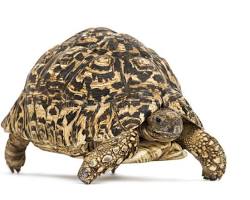
Leopard Tortoise
Stigmochelys pardalis
The leopard tortoise is one of the most beautiful tortoises available in the pet trade, named for the distinctive black and yellow spotted pattern on their high-domed shells. Native to the savannas and grasslands of eastern and southern Africa, these large tortoises are the fourth-largest tortoise species in the world, with adults reaching 10-18 inches though some individuals exceed 2 feet and 40+ pounds. Leopard tortoises are long-lived animals with lifespans often exceeding 50-100 years, making them a multi-generational commitment that may outlive their keepers. They require high UVB exposure, proper humidity to prevent pyramiding, and a strict grass-based herbivorous diet. Due to their size, lifespan, and space requirements, leopard tortoises are best suited for experienced keepers who can provide outdoor housing in appropriate climates.
Beginner Suitability
Temperament & Handling
Temperature & Humidity
Lighting & UVB
Enclosure
Substrate & Environment
Activity & Behavior
Diet & Nutrition
Calcium without D3 if outdoor sun/strong UVB. Calcium with D3 if limited UVB.
| Food | Category | Ca:P | Usage |
|---|---|---|---|
| Collard Greens | leafy | 9.3 | staple |
| Mulberry Leaf | leafy | 5 | staple |
| Turnip Greens | leafy | 4.5 | staple |
| Hibiscus Leaf | leafy | 4.2 | staple |
| Food | Toxicity | Category |
|---|---|---|
| Avocado | ☠️ fatal | fruit |
| Fireflies | ☠️ fatal | insect |
| Foxglove | ☠️ fatal | flower |
| Garlic | ☠️ fatal | vegetable |
Health & Critical Care
Breeding
Cost & Availability
Native Habitat
Legal & Conservation
Looks good? Hit Cmd+P (Mac) or Ctrl+P (Windows) to save as PDF.