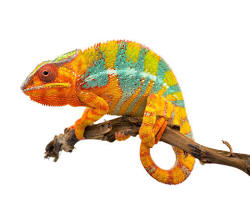
Quick Facts
Adult Size
Males 16-20 inches; Females 10-14 inches
🌱
Beginner Suitability
First Reptile?no
Beginner Score5/10
⚠ Beginner Warnings
Short lifespan (5-7 years), specialized husbandry needs, should not be handled frequently, very long egg incubation, buy only captive-bred from reputable breeders
🤚
Temperament & Handling
Temperamentdocile
Handling Toleranceminimal
Handling NotesMost panther chameleons tolerate handling better than veiled chameleons over time, but still not pets that enjoy being held. Brief handling sessions with calm individuals. Watch for stress colors.
🌡️
Temperature & Humidity
Temperature
Basking88°F
Ambient78°F
Night68°F
Basking spot 85-90°F at top, ambient 72-78°F, cooler areas 68-72°F toward bottom. Night drop to 60-68°F is beneficial.
Humidity
Target Range60% – 80%
60-80% humidity with fluctuation throughout day. Morning misting, dry midday, evening misting mimics natural cycles. Continuous high humidity causes respiratory issues.
💡
Lighting & UVB
UVB RequiredYes — Required
Target UVI3
Lighting NotesFerguson Zone 3. T5 HO 5-10% UVB depending on enclosure height. UVI 3 proven effective. Linear tubes covering 50-70% of enclosure length.
🏠
Enclosure
Minimum Size24x24x48 in screen enclosure
Recommended Size48x24x48 in screen enclosure
Enclosure Typearboreal
🪨
Substrate & Environment
Substrate TypeNo substrate recommended - bare bottom or drainage layer with screen prevents accidental ingestion. Bioactive possible for experienced keepers.
Substrate DepthNone recommended - bare bottom or drainage layer
Water Featureno
Water NotesDrip system and misting system essential. Panther chameleons drink water droplets from leaves - never from standing water. Mist 2-3 minutes 2-3x daily.
🦎
Activity & Behavior
Activity Patterndiurnal
Social Behaviorsolitary
CohabitationAbsolutely solitary. Highly territorial and stressed by visual contact with other chameleons. Males will fight causing injury or death. Keep single animals only.
🍽️
Diet & Nutrition
Diet Typeinsectivore
Feeding FrequencyDaily for juveniles (10-15 appropriately sized insects); every other day for adults
Diet NotesVariety of gut-loaded insects: crickets, dubia roaches, silkworms, hornworms, black soldier fly larvae. Variety is important for nutrition. Avoid high-fat feeders as staples.
💊 Supplementation Schedule
Calcium without D3 at most feedings. Calcium with D3 twice monthly. Multivitamin (containing preformed vitamin A) twice monthly. Avoid over-supplementation causing edema.
✅ Recommended Foods
| Food | Category | Ca:P | Usage |
|---|
| Black Soldier Fly Larvae | insect | 7 | staple |
| Dubia Roach | insect | 0.4 | staple |
🚫 Foods to Avoid
| Food | Toxicity | Category |
|---|
| Avocado | ☠️ fatal | fruit |
| Fireflies | ☠️ fatal | insect |
| Foxglove | ☠️ fatal | flower |
| Garlic | ☠️ fatal | vegetable |
⚕️
Health & Critical Care
Metabolic bone disease, respiratory infections, parasites, edema (over-supplementation), mouth rot, egg binding (females), stress-related illness
Health NotesWild-caught animals often have heavy parasite loads - buy from reputable breeders. Edema (swelling around jaw) indicates over-supplementation. Females produce eggs without mating - provide laying site.
🥚
Breeding
Difficultymoderate
SeasonYear-round with proper conditions
Clutch Size10-40 eggs
Incubation180-360 days (6-12 months!) depending on temperature
Breeding NotesVery long incubation period - often 6-12 months. Temperature must be carefully controlled. Cooler temps produce longer incubation but potentially healthier hatchlings.
💰
Cost & Availability
Price Rangeexpensive
Availabilitymoderate
🌍
Native Habitat
Native RegionMadagascar
Habitat Typerainforest
Climate NotesHumid tropical forest and edge habitats. High humidity with good airflow. Seasonal variation in rainfall.
📋
Legal & Conservation
Conservation StatusLeast Concern
Legal RestrictionsMadagascar export regulations. Most should be captive bred.
Looks good? Hit Cmd+P (Mac) or Ctrl+P (Windows) to save as PDF.