Panther Chameleon
Furcifer pardalis
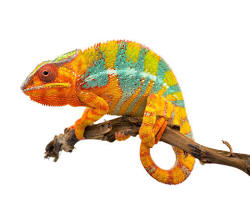
The panther chameleon is widely considered the most beautiful and rewarding chameleon species for captive keeping. Native to Madagascar, males are famous for their spectacular coloration that varies dramatically by locale - Ambilobe males display vibrant blues, reds, and oranges, while Nosy Be males are predominantly turquoise, and Sambava males show reds and yellows. Females are more subdued in salmon and peach tones. Panther chameleons are generally considered slightly hardier than veiled chameleons and often become more tolerant of their keepers with time. Like all chameleons, they require screen enclosures for airflow, drip/misting systems for drinking water (they will not drink from standing water), and careful temperature and humidity management.
lizard
insectivore
Males 16-20 inches; Females 10-14 inches
5-7 years
diurnal
docile
5/10
Recommended Setup
Essential gear for Panther Chameleon
Curated picks for a complete first-time setup. Affiliate links — purchases support the site at no extra cost to you.
Recommended Enclosure
48x24x48 in screen enclosure — the foundation of any successful setup.
View on AmazonSubstrate
No substrate recommended - bare bottom or drainage layer with screen prevents accidental ingestion. Bioactive possible for experienced keepers. substrate matched to natural habitat.
View on AmazonThermostat
Non-negotiable safety. Controls heat sources to prevent fires and burns. The Inkbird ITC-308 is the de facto standard.
View on AmazonCalcium + D3 Supplement
Daily for growing reptiles, several times per week for adults. Pair with proper UVB — supplements alone don't replace it.
View on AmazonMultiple Hides
Reptiles need cover on both warm and cool sides. Open enclosures cause chronic stress — appetite issues, glass surfing, and refusal to bask.
View on AmazonReptile Vault is a participant in the Amazon Services LLC Associates Program. We may earn a commission from qualifying purchases made through these links, at no additional cost to you. Recommendations are based on industry standards and keeper experience.
Warnings
Short lifespan (5-7 years), specialized husbandry needs, should not be handled frequently, very long egg incubation, buy only captive-bred from reputable breeders