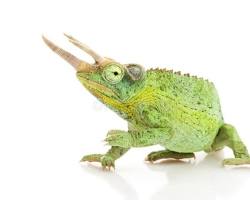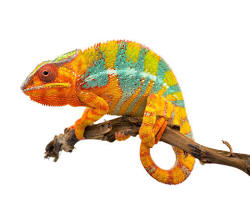
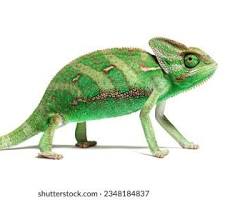
Veiled Chameleon
Chamaeleo calyptratus
The veiled chameleon (also called Yemen chameleon) is the most commonly kept chameleon species due to being hardier than many other chameleons, though hardy is relative - all chameleons are considered intermediate to advanced reptiles requiring specialized husbandry. Native to Yemen and Saudi Arabia, veiled chameleons are impressive arboreal lizards with tall casques (helmet-like structures) on their heads, independently moving eyes, and the ability to change colors based on mood, temperature, and social signaling. They require specialized care including screen enclosures for proper airflow, drip systems or misters for drinking water since they will not drink from standing water, and careful temperature gradients. Female veiled chameleons produce eggs even without mating and MUST have a laying bin with moist soil available or they will become egg-bound, which is fatal.
lizard
insectivore,omnivore
18-24 inches (males larger)
5-8 years
diurnal
solitary
5/10
Recommended Setup
Essential gear for Veiled Chameleon
Curated picks for a complete first-time setup. Affiliate links — purchases support the site at no extra cost to you.
Substrate
No substrate (bare bottom) or bioactive if experienced substrate matched to natural habitat.
View on AmazonThermostat
Non-negotiable safety. Controls heat sources to prevent fires and burns. The Inkbird ITC-308 is the de facto standard.
View on AmazonCalcium + D3 Supplement
Daily for growing reptiles, several times per week for adults. Pair with proper UVB — supplements alone don't replace it.
View on AmazonMultiple Hides
Reptiles need cover on both warm and cool sides. Open enclosures cause chronic stress — appetite issues, glass surfing, and refusal to bask.
View on AmazonReptile Vault is a participant in the Amazon Services LLC Associates Program. We may earn a commission from qualifying purchases made through these links, at no additional cost to you. Recommendations are based on industry standards and keeper experience.
Warnings
Short lifespan, stress easily, complex husbandry, females need laying bin