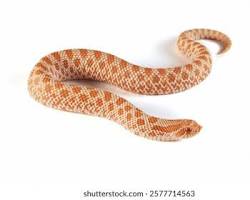
Quick Facts
Adult Size
15-24 inches (females larger than males)
Origin
Great Plains of North America (Canada to Mexico)
🌱
Beginner Suitability
First Reptile?with research
Beginner Score7/10
⚠ Beginner Warnings
Can be finicky feeders requiring scenting prey, dramatic defensive behaviors can startle new keepers, mildly venomous (not dangerous to humans)
🤚
Temperament & Handling
Temperamentdocile
Handling Tolerancegood
Handling NotesGenerally docile with regular handling despite dramatic threat displays. New hognoses may hiss, flatten, and bluff strike but almost never actually bite. They calm down quickly with patient handling.
🌡️
Temperature & Humidity
Temperature
Basking90°F
Ambient78°F
Night68°F
Basking spot 90-92°F, cool side 72-78°F. Night temps can drop to 68-70°F. Temperature gradient important.
Humidity
Target Range30% – 50%
Low humidity 30-50%. This is a dry-climate species. Too high humidity can cause respiratory issues and scale rot.
💡
Lighting & UVB
UVB RequiredYes — Required
Target UVI0.7-1.0
Lighting NotesFerguson Zone 1-2. Low-output UVB is beneficial. 5-6% T5 or shade-dweller style bulb provides benefits.
🏠
Enclosure
Minimum Size20 gallon long (30x12x12)
Recommended Size40 gallon breeder (36x18x18)
Enclosure Typeterrestrial
🪨
Substrate & Environment
Substrate TypeSand and soil mix or aspen allowing burrowing. These are burrowing snakes that spend significant time underground.
Substrate Depth3-4 inches minimum for burrowing
Water Featureno
Water NotesWater bowl changed every 1-2 days. Standard hydration needs. Do not mist - this is a dry-climate species.
🦎
Activity & Behavior
Activity Patterndiurnal
Social Behaviorsolitary
CohabitationNever cohabitate. While not typically aggressive toward each other, cohabitation causes stress. House individually.
🍽️
Diet & Nutrition
Diet Typecarnivore
Feeding FrequencyEvery 5-7 days for adults; every 4-5 days for juveniles
Diet NotesMice are the staple diet. Some individuals are finicky feeders - scenting prey with toad or salmon juice can help picky eaters. Avoid feeding wild-caught toads due to parasite risk.
💊 Supplementation Schedule
Not required when feeding whole prey. Standard snake supplementation applies.
✅ Recommended Foods
| Food | Category | Ca:P | Usage |
|---|
| Pinky Mouse | whole_prey | 1.5 | staple |
| Fuzzy Mouse | whole_prey | 1.5 | staple |
| Hopper Mouse | whole_prey | 1.5 | staple |
| Weaned Rat | whole_prey | 1.5 | staple |
🚫 Foods to Avoid
| Food | Toxicity | Category |
|---|
| Avocado | ☠️ fatal | fruit |
| Fireflies | ☠️ fatal | insect |
| Foxglove | ☠️ fatal | flower |
| Garlic | ☠️ fatal | vegetable |
⚕️
Health & Critical Care
Respiratory infections, parasites, regurgitation, anorexia (feeding strikes), scale rot from high humidity
Health NotesCan be finicky feeders - this is their one care challenge. Scenting prey with toad/frog scent or salmon helps. Feeding strikes are more common than in corn snakes or ball pythons.
🥚
Breeding
Difficultyeasy
SeasonSpring after brumation
Clutch Size4-23 eggs
Incubation50-60 days at 78-82°F
Sexual Dimorphismmoderate
Breeding NotesBrumation (2-3 months at 55-60°F) triggers breeding. Relatively easy to breed once adults are cycling properly.
✨
Available Morphs
Normal/Wild Type, Albino, Anaconda, Axanthic, Snow, Toffeebelly, Arctic, Lavender, Super Conda
💰
Cost & Availability
Price Rangemoderate
Availabilitycommon
🌍
Native Habitat
Native RegionGreat Plains of North America (Canada to Mexico)
Habitat Typesemi arid
Climate NotesPrairies and semi-arid grasslands. Sandy soils for burrowing. Hot summers and cold winters with natural brumation period.
📋
Legal & Conservation
Conservation StatusLeast Concern
Legal RestrictionsNone in most areas
Looks good? Hit Cmd+P (Mac) or Ctrl+P (Windows) to save as PDF.