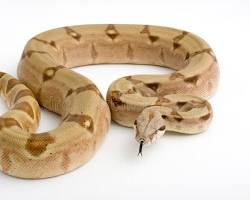
Ball Python - Ball python curled in defensive ball position
beginner Care
carnivore
crepuscular

Ball Python

Python regius

The ball python, also known as the royal python, is the most popular pet snake in the world and consistently the top-selling reptile at expos and pet stores. Native to the grasslands and savannas of West and Central Africa, these docile constrictors get their name from their defensive behavior of curling into a tight ball with their head protected in the center. Ball pythons are available in thousands of stunning color morphs created through selective breeding, from brilliant yellows and oranges to pure white leucistics. They are excellent beginner snakes due to their calm temperament, manageable adult size of 3-5 feet, and relatively simple care requirements. However, they are notorious for occasional feeding strikes that can last weeks or even months, which while normal, can stress new keepers.

Share:
Group

snake

Diet

carnivore

Size

3-5 feet (females larger)

Lifespan

20-30+ years

Activity

crepuscular

Temperament

docile

Beginner Score

8/10

Recommended Setup

Essential gear for Ball Python

Curated picks for a complete first-time setup. Affiliate links — purchases support the site at no extra cost to you.

Foundation

Recommended Enclosure

4x2x4 ft or larger — the foundation of any successful setup.

View on Amazon
Critical

UVB Lighting

Critical for Ball Python. Target UVI 0.7-1.0.

View on Amazon
Per-species

Substrate

Coconut fiber, cypress mulch, or bioactive mix substrate matched to natural habitat.

View on Amazon
Universal

Thermostat

Non-negotiable safety. Controls heat sources to prevent fires and burns. The Inkbird ITC-308 is the de facto standard.

View on Amazon
Universal

Calcium + D3 Supplement

Daily for growing reptiles, several times per week for adults. Pair with proper UVB — supplements alone don't replace it.

View on Amazon
Universal

Multiple Hides

Reptiles need cover on both warm and cool sides. Open enclosures cause chronic stress — appetite issues, glass surfing, and refusal to bask.

View on Amazon

Reptile Vault is a participant in the Amazon Services LLC Associates Program. We may earn a commission from qualifying purchases made through these links, at no additional cost to you. Recommendations are based on industry standards and keeper experience.

First Reptile: yes
Score
8/10

Warnings

Feeding strikes common; humidity management important

Tools for Ball Python

Related Species

Care Guides

Common Reptile Care Mistakes
Husbandry
Common Reptile Care Mistakes
Many reptile care problems start with husbandry errors that seem small at first but create major consequences over time. The most common reptile care mistakes include using undersized enclosures, poor temperature planning, weak UVB setups, bad humidity management, oversimplified feeding, and relying on generic care advice instead of species specific husbandry. These mistakes are common because reptiles are often marketed as easy pets when in reality they are highly dependent on environmental precision. One of the hardest things for new keepers is that a reptile can survive under mediocre care for a while. That creates false confidence. Survival is not the same as good husbandry. Many reptiles tolerate flawed setups long enough that owners assume the care must be fine, even when the enclosure, lighting, or diet would not hold up under serious review. Mistake one: treating reptiles as one category This is the root of many problems. Reptiles are often discussed as if one care sheet can cover everything from iguanas to geckos to snakes. That is a fast path to bad decisions. Species differ in enclosure needs, thermal gradients, humidity patterns, UVB use, diet, activity level, and behavior. Advice that helps one reptile may be actively wrong for another. Owners who use broad reptile care summaries without verifying species specific needs often build enclosures that are mismatched from the start. Mistake two: using an enclosure that is too small or too simple Many reptiles are housed in enclosures chosen for store convenience rather than actual husbandry needs. Small enclosures restrict movement, compress thermal gradients, reduce environmental choice, and make the whole setup harder to manage well. A bigger issue is not just floor space. It is whether the enclosure allows the reptile to behave normally. Can it thermoregulate. Can it hide appropriately. Can it climb if that matters. Can it move between zones. Can the habitat support the necessary lighting and heating structure. An enclosure can be technically occupied without being functionally adequate. Mistake three: poor heat planning Heat errors are among the most common reptile husbandry failures. Using one temperature reading for the whole enclosure is a problem because a reptile enclosure should not be thought of as one temperature. Reptiles need gradients and zone choice. Measuring the wrong thing is another issue. Ambient readings matter, but so do actual basking surfaces and the range across the enclosure. Providing heat without usable behavior options is also common. A heat source alone is not a full thermal plan. The reptile needs the ability to move through a meaningful gradient. Owners often know they need heat but underestimate how precise and structured the setup should be. Mistake four: weak or ineffective UVB setups UVB confusion is a major issue in reptile care. Many keepers buy a bulb and assume that step is complete. But effective UVB depends on bulb type, fixture quality, distance, placement, enclosure structure, and whether the reptile can actually access the zone. A UVB product that is present but poorly deployed is not the same as a strong UVB system. This mistake is especially common in species that clearly rely on basking and light exposure. Weak lighting plans can quietly undermine diet quality and calcium management for a long time before the owner understands what is wrong. Mistake five: bad humidity management Humidity advice online is often too generic. Some owners run the entire enclosure too wet. Others keep it too dry and then wonder why sheds or hydration issues occur. Humidity should be approached as a species specific environmental target, not a single number copied from an unrelated care sheet. It also depends on how the enclosure is built. Ventilation matters. Substrate choice matters. Water placement matters. Hide structure matters. The reptile's actual microclimate matters. A reptile does not experience only the room air reading. It experiences the full habitat. Mistake six: oversimplified feeding Feeding mistakes are common because owners often want a clean list of approved foods or insects and then stop thinking. Good nutrition is broader than a list. A true herbivore should not be fed like a casual salad eater. Diet structure matters. Strong staple greens should lead the plan. Insect eaters should not be managed as though all feeders are equal. Quality, variety, and supplementation matter. Omnivores still require structure. The ratio and pattern of feeding should reflect the species and life stage. A common issue across all categories is that owners overuse convenient or highly accepted foods at the expense of better long term structure. Mistake seven: assuming supplements fix everything Supplements can help, but they do not correct every weak husbandry choice. A poor diet, bad UVB setup, and weak thermal structure cannot be fully repaired with powders. Supplements should support a good plan, not substitute for one. This mistake is common because supplements feel actionable. Owners want to solve a problem quickly. But reptile care rarely rewards shortcut thinking. The best supplement plan in the world is still secondary to a strong enclosure and species appropriate feeding structure. Mistake eight: not evaluating husbandry as a system One of the clearest differences between beginner care and stronger husbandry is whether the owner thinks in isolated tasks or connected systems. Reptile care is a systems problem. Heat affects digestion and behavior. UVB interacts with calcium planning. Humidity affects hydration and shedding. Enclosure design affects how the reptile uses the thermal and lighting zones. Food quality interacts with everything else. When owners treat each category separately, they often miss the real cause of a problem. A lizard that stops eating may not have a food problem at all. A snake with repeated shed issues may not simply need more misting. A reptile that seems lethargic may be reacting to multiple environmental failures at once. Mistake nine: trusting random care advice too easily Conflicting reptile advice is everywhere. Social media, old care sheets, pet stores, and generic articles often present strong opinions without much species context. New keepers are especially vulnerable to this because reptile care can look deceptively simple from the outside. A better approach is to ask whether the advice is species specific. Ask whether it explains the why behind the recommendation. Ask whether it aligns with a full husbandry system. Ask whether it is based on practical long term care rather than convenience. This filter helps owners avoid a lot of low quality guidance. Mistake ten: waiting too long to fix obvious setup problems Owners often recognize that something is off but delay action because the reptile is still eating or still alive. That mindset can allow weak husbandry to continue much longer than it should. The better approach is to correct setup issues early, especially when they involve enclosure size, lighting, heat, diet structure, or hydration. Reptiles often benefit from environmental improvement even before visible crisis appears. In many cases, the animal has been compensating for the setup rather than thriving in it. How to avoid these mistakes Start with the exact species. Do not build the care plan around generic reptile assumptions. Prioritize the enclosure as a functional environment. Think beyond tank size and ask whether the habitat allows normal reptile behavior. Build real gradients. Heat, light, and humidity should offer meaningful choices. Use strong staple foods and structured feeding. Do not let convenience drive the diet. Review lighting seriously. Especially for species that need UVB, treat lighting as a core husbandry pillar. Observe the reptile's actual use of the enclosure. A setup is only as good as its functional use. If the animal never uses the basking shelf, cannot reach the UVB zone, or hides constantly because the habitat lacks security, the design needs work. Final takeaway The most common reptile care mistakes happen when owners underestimate how detailed reptile husbandry really is. Small errors in heat, UVB, humidity, enclosure design, and diet often compound over time. Good reptile care starts when the owner stops looking for quick approval and starts building a species specific system that supports long term health. Most problems become easier to prevent once you focus on function, consistency, and the reality that reptiles are not low maintenance animals.
Read
Reptile Health Guide
health
Reptile Health Guide
A strong reptile health guide starts with one principle: most serious reptile problems are easier to prevent than to reverse. Good health monitoring is not about waiting for dramatic symptoms. It is about recognizing subtle changes in posture, appetite, hydration, stool quality, body condition, movement, and daily behavior before a minor issue becomes a crisis. Reptiles often hide decline well, which means owners who only react to obvious emergencies are usually reacting too late. This is one reason health guidance for reptiles needs to be practical rather than dramatic. Owners need a system for observation, not just a list of scary diseases. A reptile can look calm and still be dehydrated. It can continue eating while living in a poor thermal setup. It can survive with weak UVB or poor nutrition for a long time before visible structural problems appear. That is why good reptile health care is built on prevention, routine review, and early pattern recognition. Start with a daily health baseline A useful baseline makes every future decision easier. Owners should know what normal looks like for their reptile when the animal is comfortable, hydrated, properly heated, and established in the enclosure. That includes daily rhythm, preferred basking areas, general body posture, appetite pattern, elimination frequency, activity level, and tolerance for handling or observation. Without a baseline, owners are forced to guess whether a change is meaningful. With a baseline, subtle changes become obvious. A reptile that normally basks openly but suddenly hides all day is sending information. A herbivore that begins selectively refusing staple foods may not just be picky. A lizard that sits flatter than normal, keeps its eyes closed during active hours, or moves less willingly may be showing the early stages of a larger husbandry or health issue. The morning walkthrough matters One of the most valuable habits a reptile keeper can build is a fast but consistent morning check. This does not need to become obsessive. It should be structured enough to catch problems early. A practical check includes: Is the animal positioned normally for the time of day Are the eyes open, alert, and responsive Is breathing smooth and not effortful Is the body held normally, not weak or collapsed Has the animal used the enclosure in a normal way Is there stool, urate, or other evidence of digestive change Do water, humidity, and temperature conditions look correct Does the reptile appear hydrated and appropriately muscled This kind of routine catches more health issues than occasional deep inspection because it makes change visible. Common reptile health issues owners should know Metabolic bone disease is one of the most important long term health concerns in captive reptiles because it reflects deeper husbandry failure. Weak UVB, poor calcium support, poor diet structure, and inadequate thermal management often work together to produce it. Owners sometimes focus on one cause, but metabolic disease is usually a systems problem. By the time a reptile shows obvious weakness, tremors, jaw softness, deformity, or movement changes, the process may already be advanced. Dehydration is another major issue and often more subtle than people expect. Dehydration is not just a matter of whether a water dish exists. It depends on species specific hydration opportunity, humidity management, enclosure design, food moisture, and whether the reptile is actually using the environment. A reptile can live in an enclosure with water and still be underhydrated if the husbandry pattern is poor. Stomatitis, often referred to as mouth rot, is another issue that owners should take seriously. Mouth problems can be tied to stress, poor hygiene, injury, immune compromise, or broader husbandry failures. The key lesson is that visible mouth inflammation is not just a mouth issue. It often reflects a system that needs review. Shedding complications are also common, especially in animals kept too dry or managed with poor microclimate design. Owners sometimes treat repeated bad sheds as normal when they are usually diagnostic. A reptile with recurring retained shed is often telling you that the enclosure is not functioning properly for that species. Kidney and dehydration concerns deserve more attention Renal stress in reptiles is often discussed too late. Many keepers underestimate how much chronic underhydration, weak husbandry, poor diet structure, or long term environmental stress can affect overall health. While owners should avoid self diagnosing advanced kidney disease at home, they should understand that chronic dehydration and weak daily management can contribute to serious long term decline. Warning patterns may include persistent lethargy, reduced appetite, poor body condition, changes in urate quality, abnormal drinking behavior, or vague decline without an obvious single cause. These are not signs to panic blindly. They are signs to stop assuming everything is fine and review the full husbandry system immediately. Why diagnostic thinking must start with husbandry One of the most common mistakes reptile owners make is separating health from care. They notice a symptom and search for a disease name before reviewing heat, UVB, humidity, enclosure function, diet structure, supplementation, hydration opportunity, and stress load. That often leads to poor conclusions. A reptile with weak appetite may need medical evaluation, but it may also be living in the wrong temperature gradient. A lizard with poor body condition may not have a mysterious disease. It may have a long term nutrition problem. A reptile with repeated low level issues may be experiencing chronic husbandry mismatch rather than a random isolated illness. This does not mean every health problem can be solved at home. It means the owner should think in the right order: Review husbandry carefully. Identify whether the issue appears environmental, nutritional, behavioral, traumatic, infectious, or systemic. Escalate appropriately and seek qualified reptile veterinary care when needed. What owners should document Documentation is one of the most underused health tools in reptile keeping. When a reptile starts declining, vague memory is not enough. Owners should track: Weight trends Feeding acceptance and refusal patterns Shed history Stool and urate changes Changes in mobility or climbing behavior Changes in basking or hiding behavior Recent enclosure changes Recent lighting or supplement changes This creates a more useful picture for both the owner and a veterinarian. It also helps separate one bad day from a real pattern. A practical first aid mindset Every reptile keeper should have a basic plan for urgent support while recognizing that home care is not a substitute for veterinary medicine. A practical first aid setup may include clean towels, safe containment options, a way to verify temperatures, gentle cleaning supplies appropriate for reptile equipment, and clear emergency contact information for a reptile qualified veterinarian. The goal is not to become your own vet. The goal is to avoid being unprepared during the first critical hours of a problem. Many owners waste time because they do not know where to go, how to safely contain the animal, or how to evaluate whether the enclosure itself is contributing to the issue. When to seek veterinary care Owners should not wait for a reptile to become visibly collapsing before seeking help. Earlier care is usually better. Veterinary attention is especially important when there is significant weight loss, ongoing appetite refusal, visible swelling, mouth changes, labored breathing, severe lethargy, persistent neurological signs, prolapse, suspected egg binding, trauma, or repeated unexplained decline. Even when the root cause is husbandry related, medical support may still be necessary. Preventable care mistakes and medical disease often overlap in real life. Final takeaway A good reptile health guide is not just a list of illnesses. It is a framework for prevention, observation, and earlier response. Owners who build a clear daily baseline, review husbandry as part of diagnostics, document changes carefully, and act before a problem becomes dramatic usually protect their reptiles far better than those who wait for obvious crisis. Good health care starts long before an emergency, and in reptiles, that difference often matters more than people realize.
Read
Reptile Body Language
Behavior & Demeanor
Reptile Body Language
Reptile body language is not random. Reptiles communicate through posture, stillness, movement, eye use, breathing pattern, body inflation, tail position, color change in some species, and how they occupy space. Owners who learn to read those signals usually handle less, stress less, and build better husbandry because they stop guessing what the animal is experiencing. The goal is not to anthropomorphize reptiles. It is to understand what their bodies are actually telling you. A lot of reptile owners make one of two mistakes. They either assume reptiles are unreadable, or they project mammal emotions onto them. Both approaches lead to poor handling decisions. Reptiles may not signal exactly like dogs or cats, but they still communicate clearly when you understand context. A calm reptile, a defensive reptile, a stressed reptile, and a reptile preparing to flee or strike often look very different if you know what to watch. Start with context, not one signal No single body language cue should be read in isolation. A head movement, tail motion, or posture shift only becomes meaningful when you understand the species, the setting, the time of day, and what happened right before the behavior. A reptile basking openly in a familiar enclosure may show relaxed stillness that would mean something very different if the same stillness happened in a cold travel tub after stress. This is why better body language reading starts with context: Where is the reptile What was happening right before the behavior Is this normal for this individual Is the reptile in a secure enclosure, being approached, or being handled Is the animal warm, active, breeding, shedding, or recovering from stress Owners who skip these questions often misread the reptile completely. Signs of a relaxed reptile Relaxation usually looks organized rather than dramatic. A comfortable reptile often holds the body in a stable and natural posture, uses the enclosure predictably, basks or rests without excessive vigilance, and does not show repeated defensive escalation when the owner is present at a normal distance. Depending on species, signs of comfort may include: Steady basking behavior Normal exploratory movement Resting in secure but visible positions Consistent feeding response Smooth breathing Lack of repeated retreat or defensive inflation Predictable handling tolerance in accustomed individuals Relaxation does not always mean the reptile wants interaction. It means the reptile is not currently broadcasting obvious distress. Stress body language owners should notice Stress can look subtle before it becomes obvious. A reptile may flatten the body, inflate, turn sideways to appear larger, shift breathing pattern, flick the tongue more rapidly in some species, freeze intensely, hide excessively, tail twitch, gape, or use repetitive escape behavior. Some reptiles become more still under stress, not more active. Owners often misread freeze behavior as calm when it is actually a high vigilance response. Other warning signs include: Persistent darkening or stress coloration in species where that is relevant Repeated glass interaction or frantic enclosure pacing Chronic hiding outside normal patterns Head tracking every movement in the room Defensive whipping or charging Refusal to use open basking zones despite proper enclosure design Body language should always be read alongside enclosure function. Some stress behaviors are really husbandry complaints. Body inflation, flattening, and size display Many reptiles use posture to alter their apparent size. Flattening, side presentation, and body inflation can be part of a defensive display. This does not always mean the reptile is about to attack, but it does mean the animal is concerned and trying to influence space. Owners should see this as valuable information, not as bad attitude. When these displays appear during routine approach, the reptile is telling you that the current interaction threshold is too high. Either the handling process is rushed, the enclosure does not provide enough security, the reptile has not acclimated to the owner, or the species simply needs a different interaction style. Tail language matters Tail use is one of the most revealing signals in many reptiles. Tail whipping, lifting, tension, positioning, dragging, or coiling can all have meaning depending on the species. In some lizards, a loaded tail posture combined with body inflation is a serious warning. In others, subtle tail movement may reflect arousal, courtship context, balance adjustment, or alertness. Owners should not reduce all tail movement to one rule. Instead, ask: Is the tail loose or tense Is the reptile using the tail defensively Is the tail elevated, loaded, vibrating, or being positioned with intent What is the rest of the body doing The answer comes from the whole animal, not the tail alone. Head motions and signaling Some lizards, especially iguanas and other visually expressive species, use head movement as part of communication. Head bobs, freezes, elevated posture, and deliberate orientation can all carry information. The important point is that not all head movement means aggression. Context matters. Some signals may relate to alertness, territorial display, social response, or uncertainty. This is where owners often go wrong. They see one behavior, label it aggression, and then handle poorly from that point forward. A better approach is to observe pattern. What happened right before the signal. Does the behavior escalate when you close distance. Does it decline when you reduce pressure. Is it more common during certain times, seasons, or environmental conditions. The freeze response is often misunderstood One of the most misread reptile behaviors is freezing. People often assume a reptile that sits still is calm. Sometimes that is true. Sometimes it is the opposite. Reptiles often freeze when assessing threat, especially when they are uncertain about whether escape is possible. A reptile that freezes with a tense body, intense tracking, shallow defensive breathing, or loaded posture is not relaxed. It is deciding what to do next. This matters because owners sometimes proceed to handle a reptile that has already told them no. The result is usually more stress and less trust. How body language improves handling The best handling usually begins before contact. Owners who read body language well know when to pause, when to reduce pressure, when to allow the reptile to come forward voluntarily, and when to stop. They stop interpreting every defensive signal as stubbornness and start treating it as communication. A better handling mindset asks: Is the reptile actually available for interaction right now Is my approach calm and predictable Did the reptile just signal discomfort Am I escalating because I want the interaction more than the animal can tolerate it This is especially important in species that can become highly defensive if repeatedly pushed past threshold. Species differences still matter Body language is not universal across all reptiles. A leopard gecko does not signal exactly like an iguana. A snake does not posture exactly like a large diurnal lizard. What stays consistent is the principle that posture, movement, tension, and spatial behavior are meaningful. Owners should learn the species, then learn the individual. Some reptiles are naturally more expressive than others. Some show stress through avoidance. Others display openly. Better keepers learn both the species norm and the individual's pattern. How to become better at reading your reptile Observation improves with repetition. Watch the reptile when nothing is happening. Watch it before feeding, after lights come on, during maintenance, and when approached slowly versus quickly. The more normal behavior you know, the easier it becomes to recognize meaningful deviation. It also helps to record patterns: How does the reptile behave when relaxed What behaviors appear before defensive escalation What does curiosity look like in this individual What does overload look like What enclosure changes affect body language This turns body language reading into a practical husbandry tool instead of a vague feeling. Final takeaway Reptile body language is real, useful, and worth learning. It helps owners handle more responsibly, reduce stress, improve enclosure design, and better understand what the animal is actually experiencing. The key is to stop searching for one magic signal and start reading the whole reptile in context. Posture, tension, movement, tail use, stillness, and spatial behavior all matter. Owners who learn to recognize those patterns usually make better decisions and build stronger trust than those who force interaction and guess afterward.

Read
Share this species